
Anyone who sells online uses AI for photos almost every day. Retouching, a new background, a model in a lifestyle photo. Since August, that has brought a question I’ve heard many times: do I have to label all of them now?
The short answer is that most don’t need a label. For the longer answer, I’ve tried to show how it works using one real photo of a sneaker. I edited it six different ways and explain for each edit whether the photo needs a label, and which one.
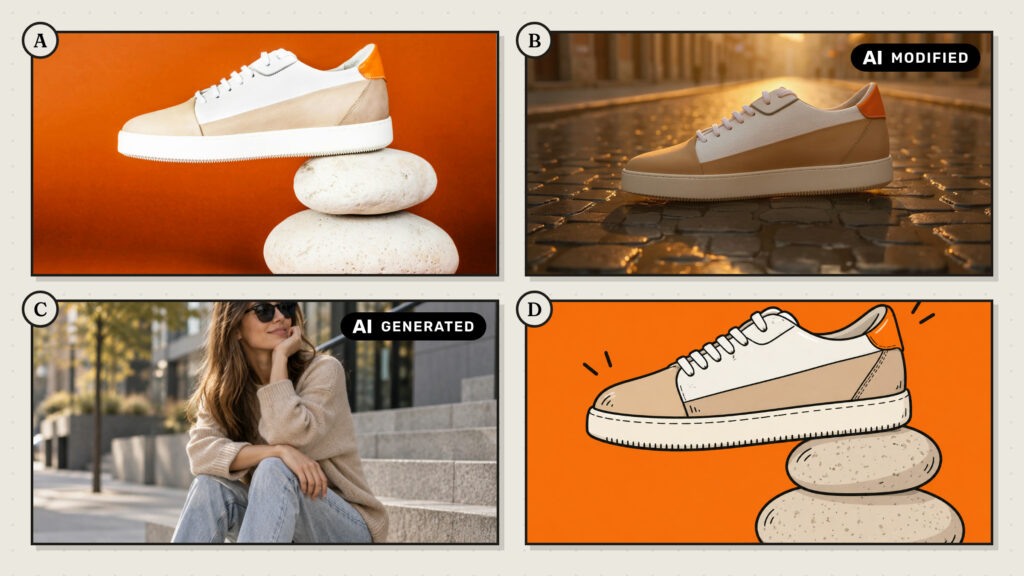
AI was used on all four. Only two need a label. You’ll find out which ones below.
What exactly has applied since August
Article 50 of the AI Act has applied since 2 August 2026. Businesses that publish content created or edited using AI must visibly label deepfakes. And deepfake is a broader term than you might think. It includes any realistic AI image, video or audio that depicts a person, object, place or event and could be mistaken for reality. A deepfake of a politician is just one example.
The obligation also covers advertising, product photos and social media posts. It doesn’t matter whether you intended to mislead anyone. What matters is how the content comes across to the customer.
Providers of AI tools such as Photoshop, ChatGPT and Midjourney have their own obligations to mark outputs using technical means. These include metadata or watermarks, for example. But a machine-readable mark like this is not the same as a visible disclosure for people, and does not replace it on its own.
One rule to help you decide
If you’re unsure, ask yourself one question: could a customer think this is a real photo? If so, and AI has added something that wasn’t in front of the lens, label the photo. If AI has only edited what was already in the photo, you don’t need a label.
There is no rule along the lines of “AI changed 30% of the photo”. The percentage of pixels changed doesn’t matter. What counts is what AI added and whether it looks real.
Testing it on one photo
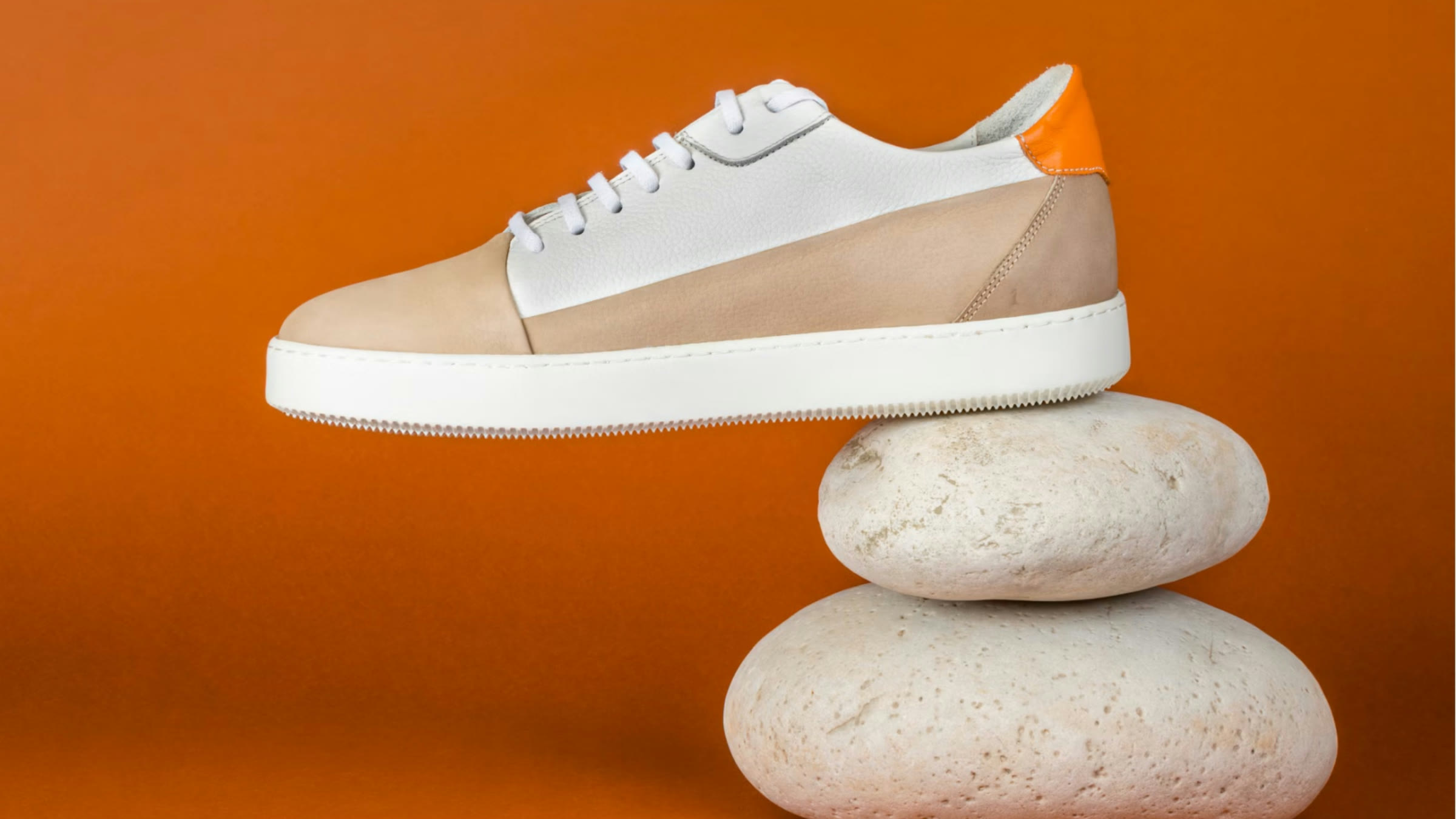
I started with a studio photo by Mojtaba Fahiminia on Unsplash. The sneaker sits on two stones against an orange background, and nothing has been drawn into the photo. All the other versions were made from this one.
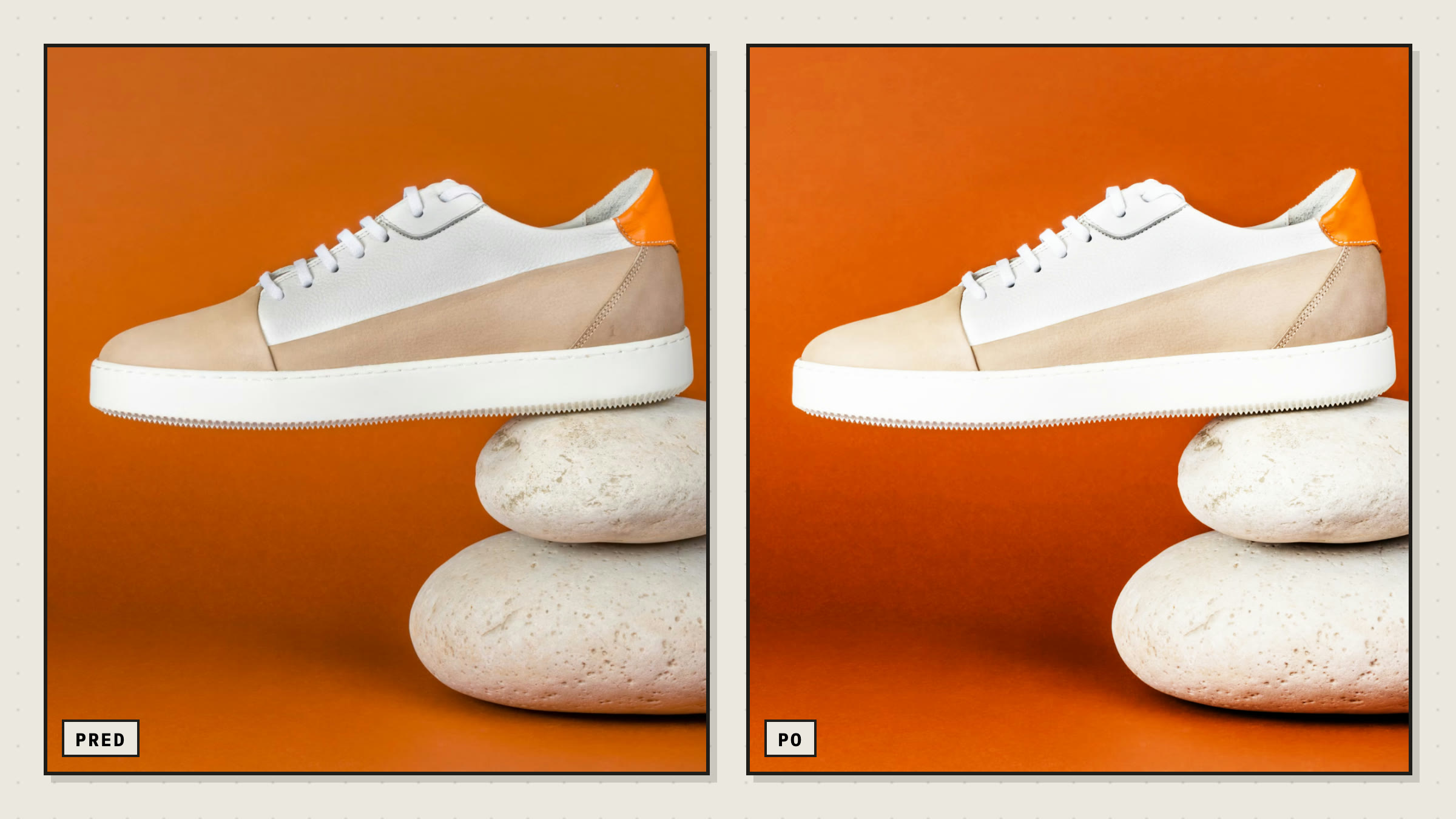
1. Colour, lighting and retouching: no label needed
Warmer colours, more contrast, dust and specks removed. The photo still shows what was in front of the lens. This kind of edit doesn’t create a false impression of reality, so it doesn’t need a label. That also applies when you use an AI feature in Lightroom or Photoshop to do it.
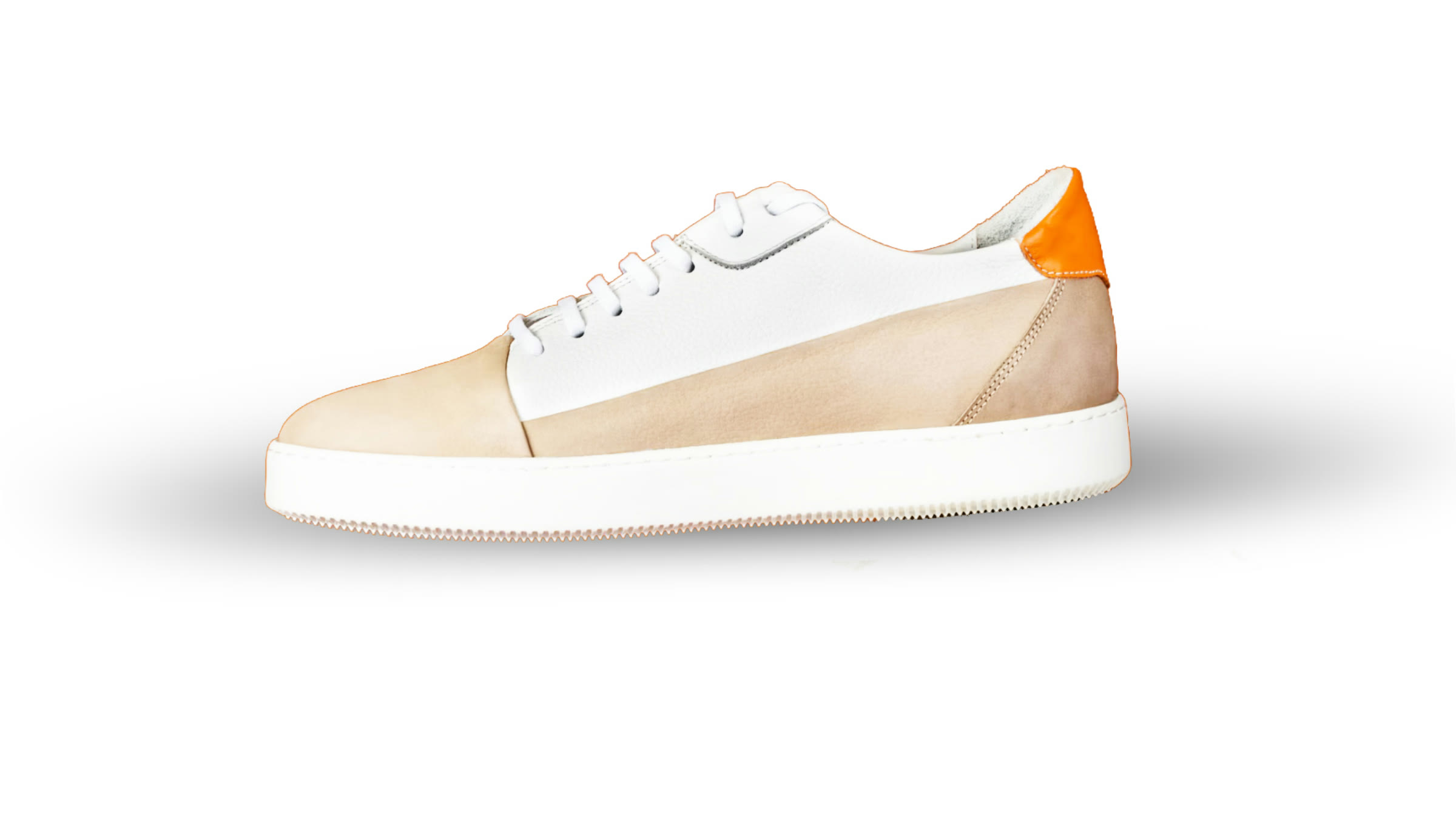
2. A white background for your online store: no label needed
The background and stones are gone, leaving the sneaker on a plain white background, just as you’re used to seeing in product listings. Nothing new has been added. Even if you removed the background with an AI tool, it’s a standard photo edit.
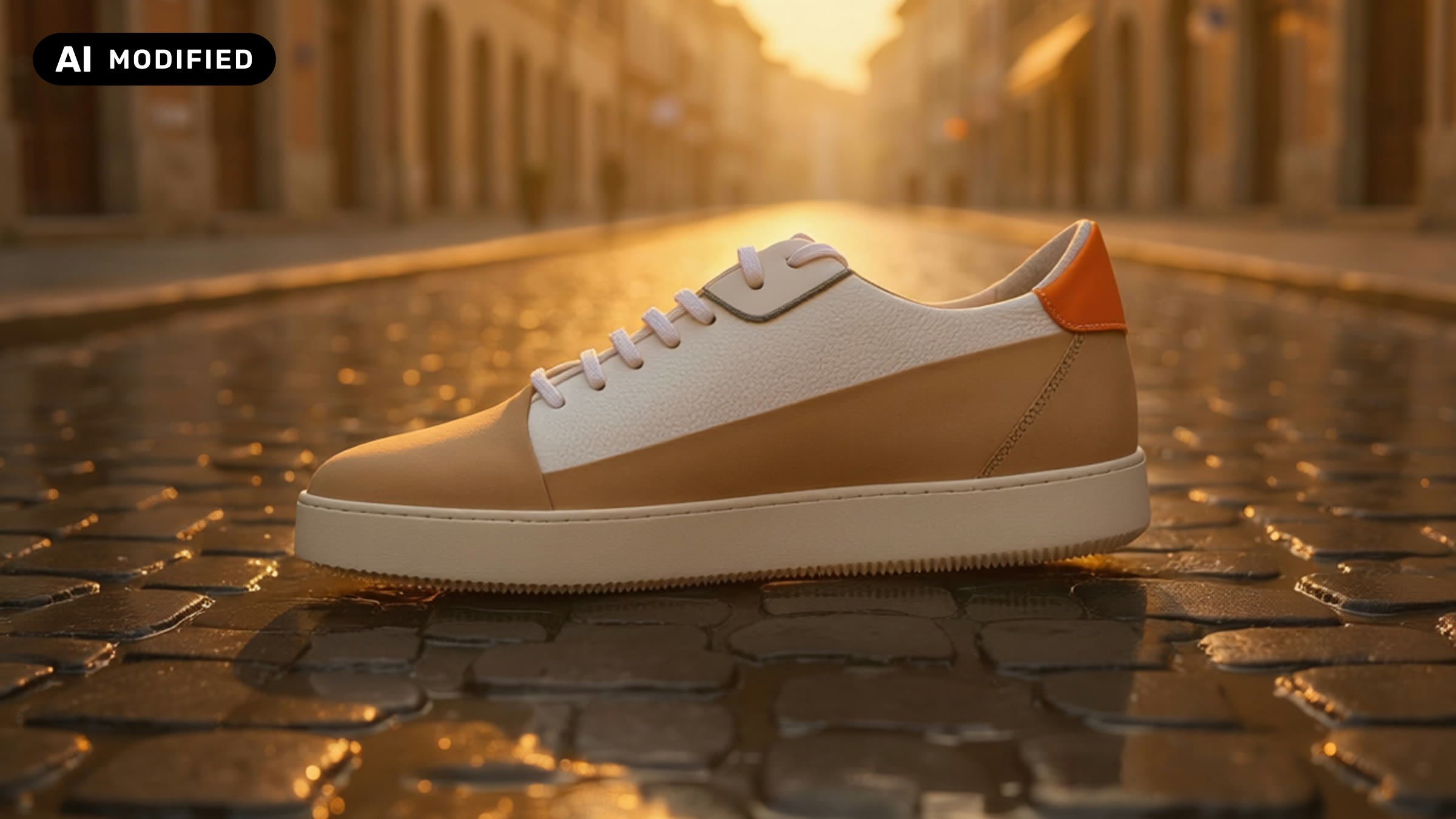
3. A product in an AI scene: label it with the AI MODIFIED icon
The sneaker is real, but AI added the street at sunset. The result looks like a photo taken in a city that doesn’t exist. This is a deepfake, and the photo needs a label. The most suitable option is the official AI MODIFIED icon, meaning a real photo altered using AI.
With this edit, I ran into something you can easily overlook. AI also redrew the sneaker itself. The leather has a different texture and the sole is cream instead of white. After every AI edit, compare the product with the original.
4. An AI-generated model: label it with the AI GENERATED icon
AI created the entire photo. The model doesn’t represent a specific person, yet she still looks real. The customer has no way of knowing that she never existed, so the photo needs a label. Since the whole thing was made by AI, the AI GENERATED icon fits.
Just as with the scene, check that AI hasn’t altered the product itself as worn by the model.

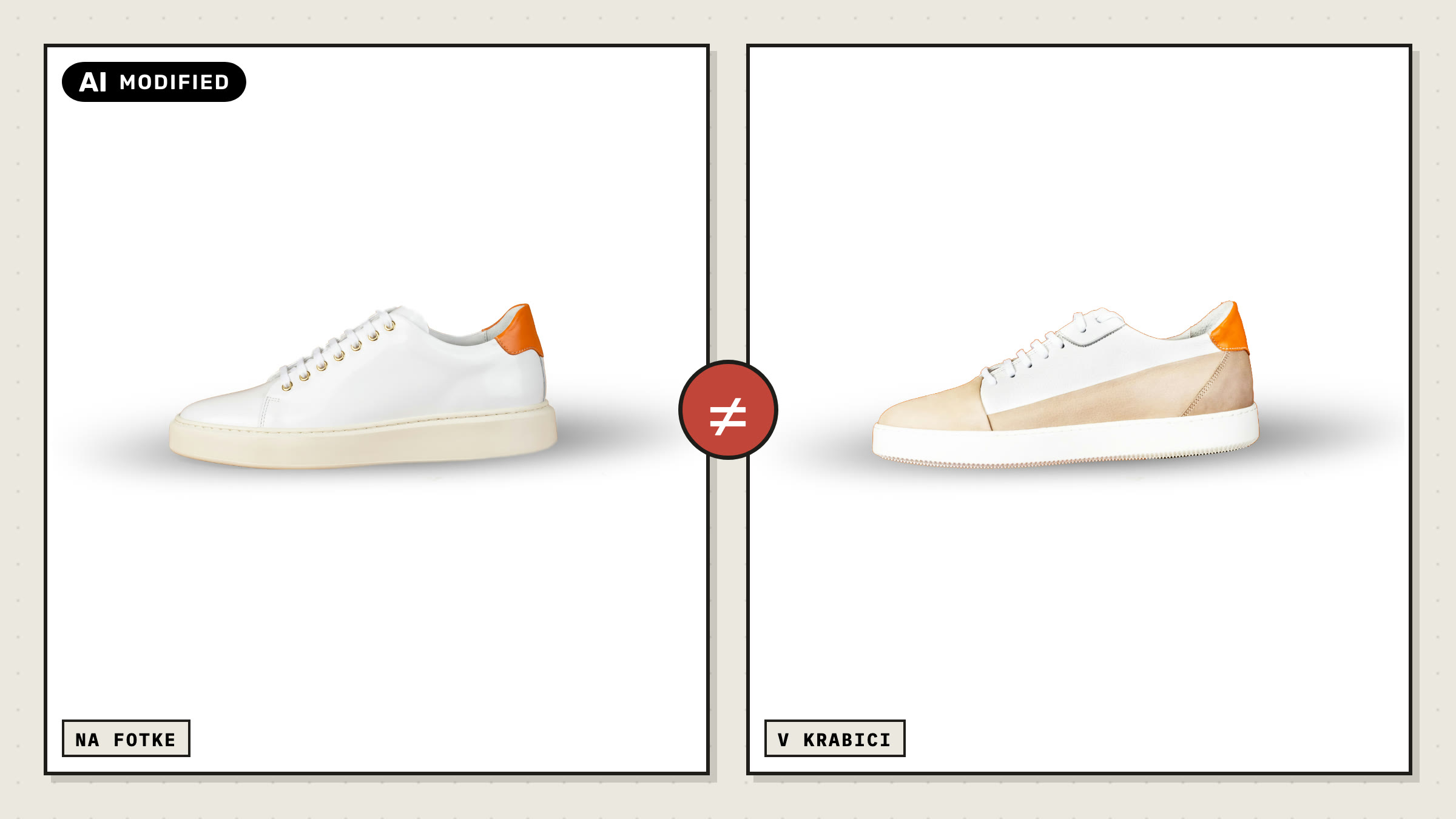
5. AI changed the product itself: don’t use this photo
In this version, AI gave the sneaker shiny leather, gold eyelets and a thicker sole. It looks more expensive in the photo, but the customer will receive suede and a thin sole. This kind of photo is misleading advertising under the Consumer Protection Act, and an AI icon won’t fix it.
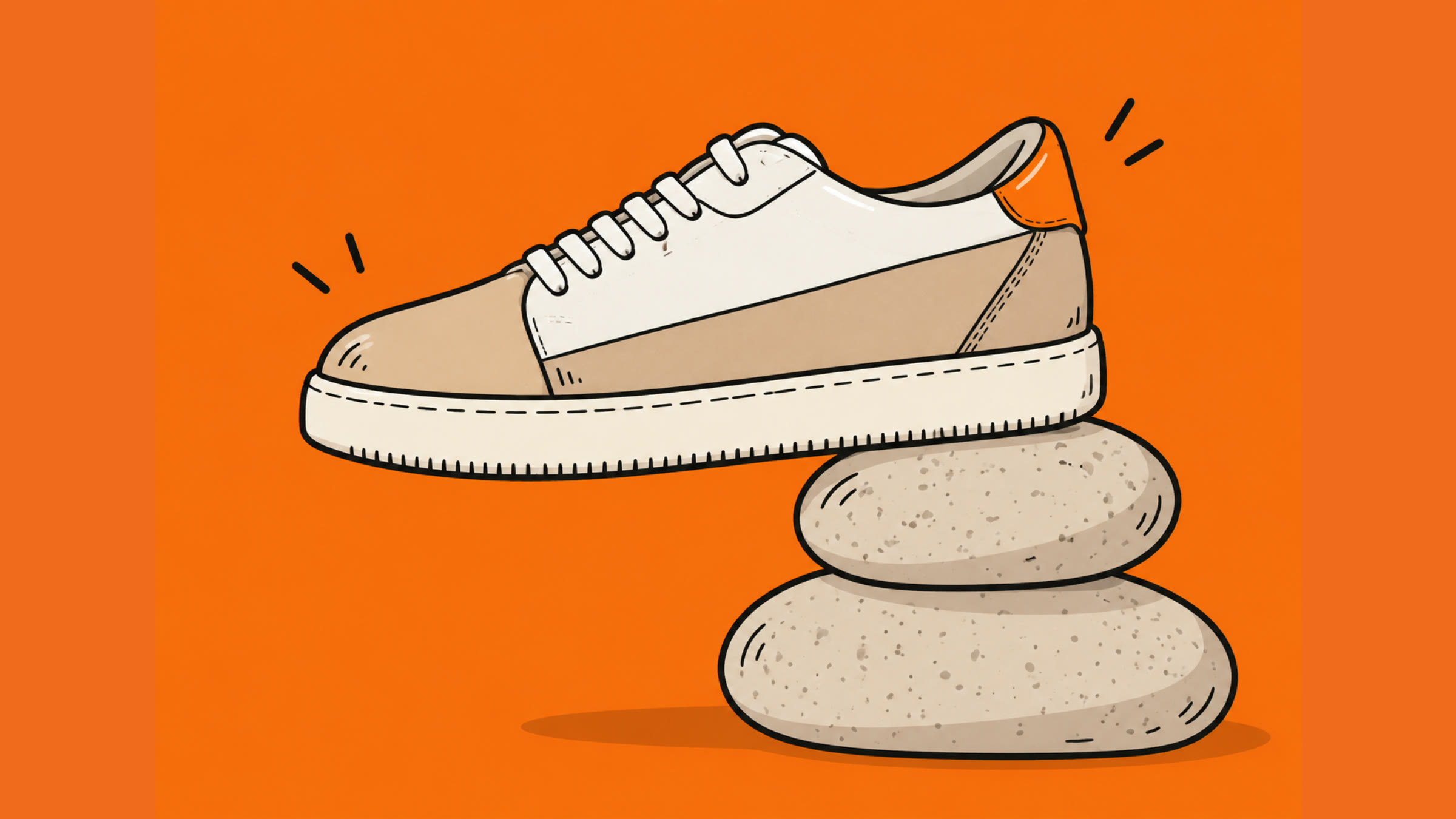
6. An illustrated version: no label needed
AI created this version too, but no one would mistake it for a photo. Obviously unrealistic content, such as an illustration, a cartoon mascot or a fantasy scene, is not a deepfake and the AI Act doesn’t require it to be labelled. Instagram, TikTok and Meta may have their own rules and may still require an AI label.
Official EU icons: which one goes where
The European Commission has created three icons for labelling AI content. They’re free, no attribution is needed, and you can download them from the Commission’s website in black and white versions, with both also available at 50% transparency.
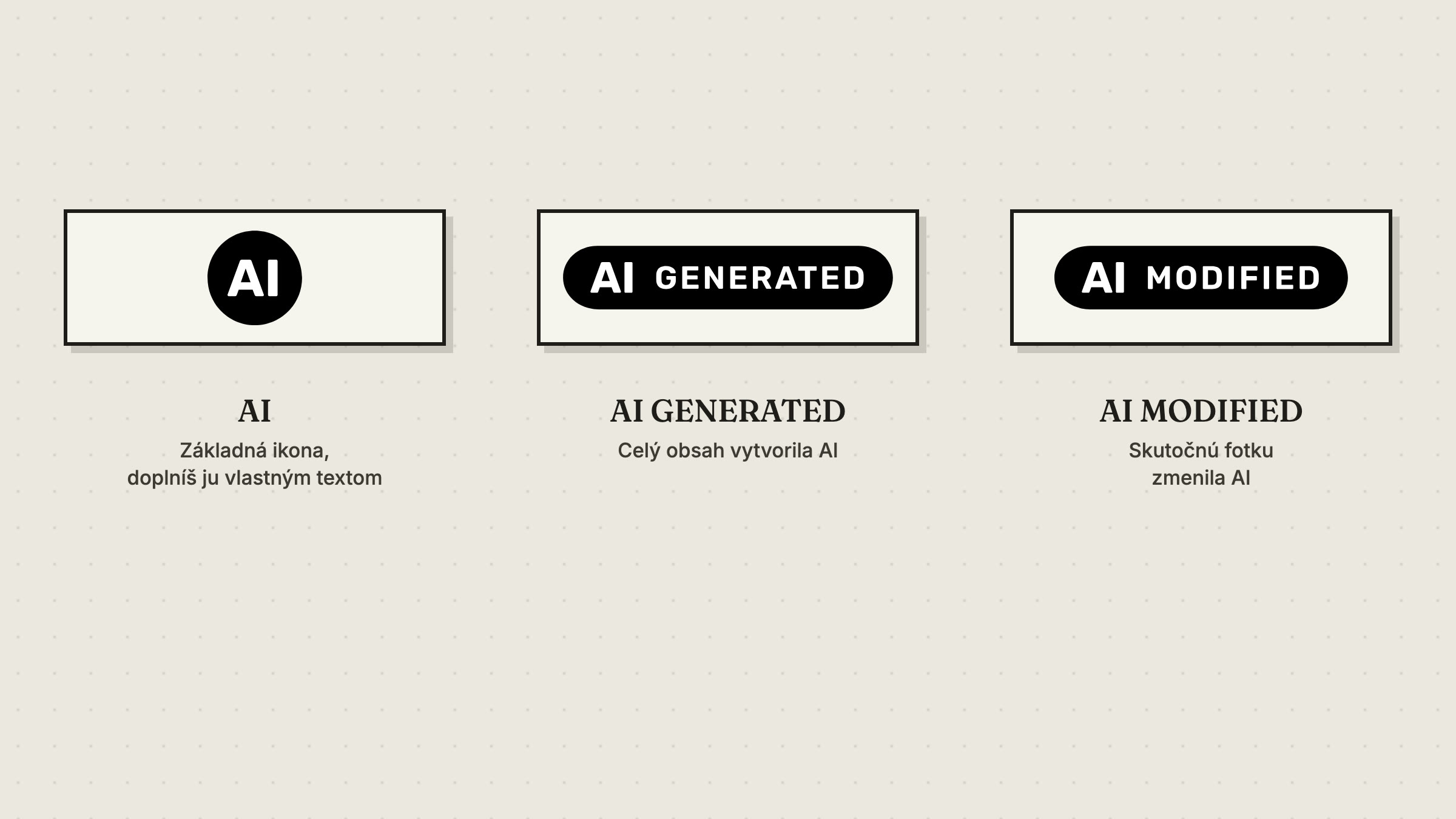
- AI MODIFIED goes on a real photo to which AI has added a scene, person or object. In our test, that’s the sneaker in the street.
- AI GENERATED goes on content created entirely by AI, where a person only supplied the prompt. In our test, that’s the AI-generated model.
- AI is the basic icon. The Commission recommends adding your own short text, such as “AI-generated voice”.
The icon is optional. Labelling the deepfake itself is mandatory. You can also use your own wording, such as “Created using AI”, as long as it’s clear and understandable. The EU icon, though, is consistent, and customers will come to recognise it.
What labelling should look like in practice

- A practical approach is to put the icon directly into the photo or video. The Commission’s recommendations also allow equivalent alternatives, such as an interface overlay. The label must be clear when the content is first shown; a description hidden away or far from the content isn’t enough.
- It must be visible from the first encounter, including in the product thumbnail and in a feed post.
- It should remain visible after the photo is shared or downloaded, so embed it directly in the image.
- For video, show it from the very first second. If you use an AI voice, say so out loud as well.
- When uploading to Instagram, TikTok or YouTube, also turn on their own AI content toggle.
Quick overview: when to add a label and where
| What you’re doing | Label | Where |
|---|---|---|
| Colour, lighting, retouching, white background | no | – |
| Illustration, cartoon image, obvious fantasy | no | – |
| Product description, post, newsletter | no | – |
| Product in a realistic AI scene | if it looks like a photo | in the corner of the photo, AI MODIFIED |
| AI-generated model or person | yes | in the corner of the photo, AI GENERATED or AI MODIFIED |
| AI avatar or AI voice in a video | yes | on screen from the very first second, with an audible disclosure for a voice too |
| Ad with realistic AI content | yes | directly in the ad |
| Text on matters of public interest without human review | yes | alongside the text |
The AI Act doesn’t require labels for everyday online store copy, such as product descriptions or newsletters. The exception is text on matters of public interest, such as health or politics, that hasn’t been checked by a person before publication.
What happens if you don’t label it
Under Article 99 of the AI Act, a breach of Article 50 can result in a fine of up to 15 million euros or 3% of worldwide annual turnover. Small and medium-sized businesses pay the lower of these two amounts. These are upper limits; the supervisory authority determines the actual amount based on the severity of the breach.
Misleading advertising, as in edit number 5, is handled separately by the Slovak Consumer Inspectorate under the Consumer Protection Act. And platforms can label unlabelled content themselves, limit its reach or reject an ad.
Three questions before publishing an AI photo
- Did AI add something that wasn’t in front of the lens? If not, you don’t need a label. Retouching and a new background without new objects are fine.
- Could a customer think this is a real photo? If so, put an AI icon directly into the photo.
- Does the product look the way it will when the customer receives it? If not, don’t use the photo. An icon won’t solve that.
The answer to the question at the start: of the four versions, B and C need a label, meaning the sneaker in the AI street and the AI-generated model. Version A is a standard edit and version D is clearly an illustration.
This article is for information only and does not replace individual legal advice. It is based on the AI Act, the European Commission’s guidelines on Article 50 and materials relating to the Code of Practice on marking and labelling of AI-generated content.
Sources
- Regulation (EU) 2024/1689 (AI Act) on EUR-Lex
- European Commission: EU icons for labelling AI-generated content
- European Commission: Code of Practice on marking and labelling of AI-generated content
- Bird & Bird: Final Guidelines on AI Act Article 50
- ComplianceHub: Article 50 and Digital Omnibus 2026
- Unsplash: original photo (Mojtaba Fahiminia)